Annual Conference 2026 Speakers
Day 1 Speakers
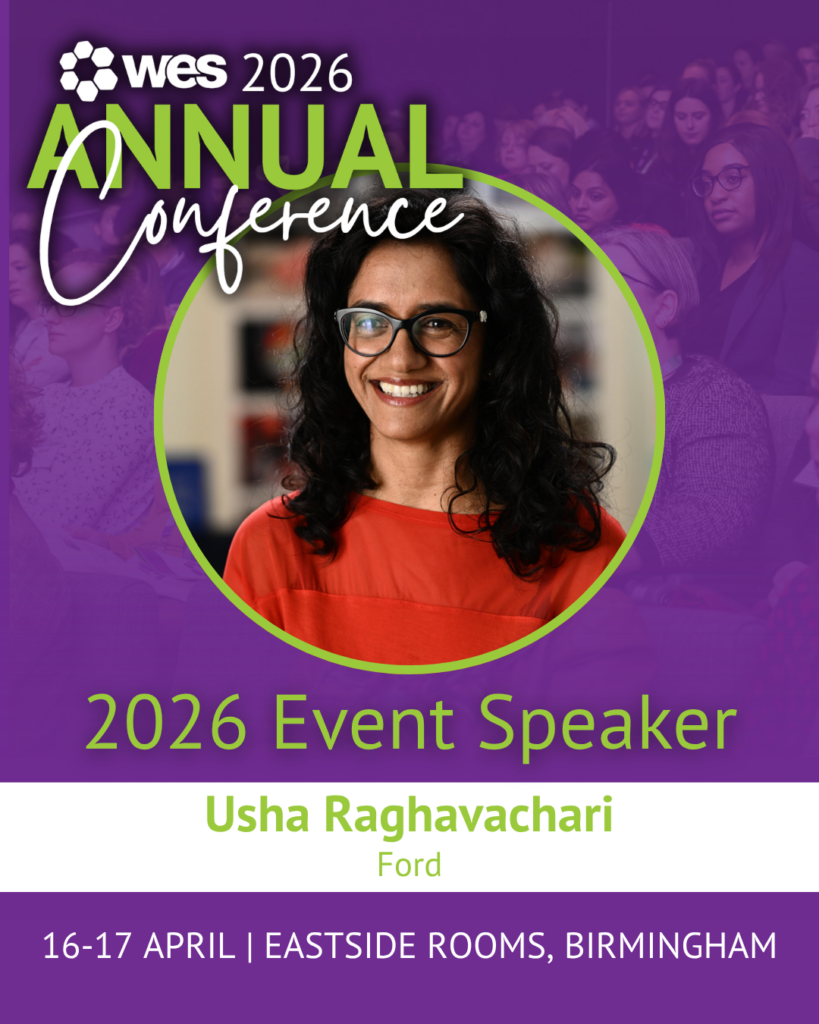
Usha Raghavachari
Usha Raghavachari is Executive Design Director for the Human Centred Design Team within Ford Motor Company. Previously, based in China, Usha led the Marketing and Product strategy for Ford APAC’s Battery Electric Vehicle portfolio for three years. Prior to that she held the role of Marketing Communications Director for Ford of Europe with responsibility for the Consumer Communications, Social Media, Events and Experiential, Media and Analytic teams. Usha joined Ford Motor Company on the Marketing graduate programme and progressed her career with an impressive range of Marketing, Strategy, Product Launch and Communications roles in Europe and Dearborn, Michigan. In her current role, Usha is passionate about developing deep human insights to drive the creative process. She loves solving problems and creating new possibilities (new products, services, experiences and new ventures) that delight Ford customers and transform the future of Ford.
Designing the future of mobility: Creating real intelligence by bringing together Human and Machine Insights
Day 1 | 10.00 – 10.30
Usha will share how her team is driving innovation in Ford Pro through designing proactive, data driven services around real human pain points

Natalie Desty
Natalie Desty is the Founder and Director of STEM Returners, an award-winning solution to an industry wide problem. After building a progressive career in recruitment, where she was Director of Maritime Engineering at a large recruitment company, Natalie was struck by the apparent lack of progress in diversity and inclusion within STEM industries. She was particularly concerned by the insurmountable barriers that people who have had a career break face, when wanting to return to STEM roles.
Natalie created a small pilot returners programme for a group of employers, which was a resounding success. Natalie has developed this programme into STEM Returners, which has supported over 650 people restart their careers in internationally renowned organisations such as BAE Systems, EDF and Leonardo UK. Returners take part in 12-week paid placements, enabling STEM leaders to access the best available talent, and in doing so, improve diversity and inclusion within their organisation. Ninety-six percent of returners secure a permanent position within the host organisation following the placement.
Natalie has a BA Honours degree in International Relations and Politics from the University of Portsmouth and was given the Eily Keary Award by the Royal Institute of Naval Architects for increasing equality, diversity and inclusion in the maritime industry. STEM Returners was awarded the Maritime UK Diversity Award in 2020, the Diversity in Engineering Award by Enginuity in March 2021, and Best Returnship Programme by the Women in Tech Employer Awards in May 2022.
Return & Retain: Unlocking STEM Talent in Industry and Research
Day 1 | 10.30 – 11.15
Across industry and research, the demand for skilled STEM professionals continues to grow. At the same time, a highly capable and experienced talent pool remains untapped: Returners. Despite their qualifications and experience, returners are often overlooked when attempting to return after a career break. Yet they bring resilience, transferable skills, fresh perspectives, and diverse lived experiences that can drive innovation and strengthen teams.
This panel brings together leaders and returners to explore how organisations can better attract, support, and retain this valuable STEM talent.
Panel:
- Chair: Dr Katie Perry, Chief Executive, The Daphne Jackson Trust
- Natalie Desty, Founder and Director, STEM Returners
- Mat Parker, Head of Careers Inclusion, ECITB
- Dr Emma Hellawell, Independent Carbon Consultant, Onyx Geo Consultancy Ltd
- Maria Holloway-Strong, Principal Engineering Geologist, Atkins Realis
In this session, you will:
Discover the value of returners and how their diverse career paths can accelerate innovation in STEM. Understand the systemic barriers returners face and gain practical strategies to design inclusive recruitment, onboarding, and retention pathways. Hear returner success stories showcasing the impact they’ve made and how returner programmes have enabled their successful return.

Christina Brugger
Christina Brugger helps women in STEM build influence, rise into leadership, and stop waiting to be recognised for the value they already bring. As founder of Keys To Impact, she has trained over 300 women working at companies including Arup, AWS, and GoCardless, and delivers programmes across engineering and tech organisations.
Christina knows this world firsthand. A chartered engineer and product leader, she spent a decade in senior roles across manufacturing, engineering, and tech — including Venture Development Director at a scaleup and Head of Digital & Insights at a FTSE100. She still works as a product and market insights consultant, keeping her in the realities women in STEM face every day.
Her book, The 5 Keys To Your Potential: An actionable guide for women in STEM, draws on psychology and leadership science — including Harvard Business School’s programme on power and influence — to explain why women hit invisible walls, and what actually works to break through them. She wrote it because no one was teaching what she knows actually matters: how power dynamics work, what builds real confidence, and the hidden rules of getting ahead in your career. Christina was named in the UK’s Top 50 Women in Engineering 2025 and is a TechWomen100 Winner 2025.”
The Science of Power and Influence
Day 1 | 11.45-12.45
Actionable tools backed by science, with live practice. Learn how to: Show up like a leader, Shift power dynamics, Get buy-in for your ideas
What you get:
• The science behind presence and influence (practical, not fluffy)
• Three signals that change how people respond to you
• Live practice with real scenarios

Mary Guerdoux-Harries
Mary Guerdoux-Harries is a resilience coach, trainer and mechanical engineer with over 20 years of experience in the technology and engineering sector across the UK, France, and Switzerland.
She holds a degree in Mechanical Engineering from Imperial College London and began her career working in engineering, later moving into senior management roles. Through this experience, she gained first-hand insight into the challenges of navigating complex organisational cultures, particularly as a woman in male-dominated fields.
Today, Mary works with engineers, managers and technical teams, delivering training and coaching focused on resilience, energy management and sustainable performance. She brings a practical, real-world approach, combining her industry background with coaching to help professionals build confidence, manage pressure and perform at their best.
Mary is particularly passionate about supporting women in engineering to find their voice, increase their visibility and thrive in their careers.
Speaking Up in Engineering: Practical Strategies from Real Experience
Day 1 | 11:45-12:45
Many women in engineering know the experience of being the only woman in the room—having ideas to share but hesitating to speak, feeling outside informal networks or unsure how to increase visibility in a way that feels authentic.
In this interactive session, Mechanical Engineer-turned-coach, Mary Guerdoux-Harries shares insights drawn from her own 20+ years working in engineering and technology around the world, as well as from coaching women navigating similar challenges today.
This session explores practical strategies to help participants better understand the dynamics of their environment, build confidence in speaking up and increase their visibility in ways that feel natural and sustainable.
Participants will leave with simple tools they can apply immediately to start being seen and heard.
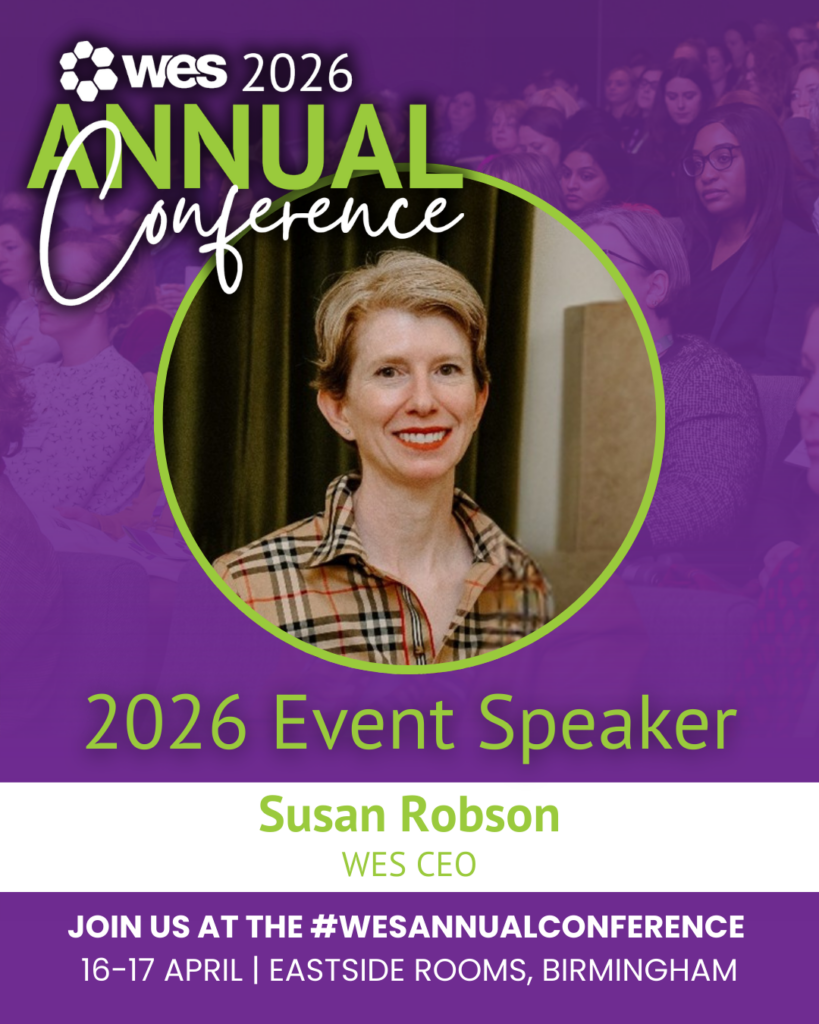
Susan Robson
Susan Robson MBE is the Chief Executive of the Women’s Engineering Society, championing one clear purpose: ensuring women can build fulfilling, influential and long lasting careers in engineering — wherever they are based and whichever part of the engineering economy they choose to shape.
With over 25 years in strategy and consulting, including 16 years in engineering and energy, Susan brings the strategic insight and industry credibility needed to connect talented women with a sector facing unprecedented demand for skills, innovation and diverse perspectives. Under her leadership, WES strengthens women’s progression, supports organisations to build inclusive and high performing teams, and helps the wider industry meet national priorities such as the transition to net zero.
Her work extends beyond organisational impact. Susan plays an active role in influencing policy and shaping the national conversation on the barriers that limit women’s participation and progression in engineering. By bringing evidence, lived experience and industry insight to policymakers, she ensures that women’s voices are heard in the decisions that define the future of the profession.
Recognised as a Financial Times Champion of Women in Business, shortlisted by The Sunday Times for Non Executive Director of the Year, and awarded an MBE in 2024 for services to inclusion in engineering, Susan is known for unlocking talent and building cultures where people can genuinely belong.
Innovation Intelligence: Opening the door to start‑ups and spin‑outs for Women in Engineering
Day 1 | 13.45 – 14.45
This breakout session is designed for women in engineering who are curious about start‑ups or spin‑outs as part of returning from a career break, exploring a mid‑career shift, or considering a move into engineering for the first time. The session is an intro session to start demystifying the world of early‑stage ventures and shows how entrepreneurship can offer flexibility, purpose and autonomy at a time when many women are reassessing what they want from work.

Rose Sargent
Rose Sargent is the EDI Lead and an employment and skills policy adviser in for Make UK’s policy directorate. She was recently awarded a place on TAF’s ’30 Under 30’ List for women in trade associations and was instrumental in the organisation and reporting of Make UK’s Industrial Strategy Skills Commission, which focused on issues with the Apprenticeship Levy and wider skills system for the manufacturing sector. In her spare time, Rose volunteers as a speaker with Neurodiverse Sport, delivering workshops on improving neuroinclusive practice in this area. She spoke at British Rowing’s annual coaching conference in 2025 and continues to raise awareness on her LinkedIn.
Making Your Voice Heard: An Introduction to Policy
Day 1 | 13.45 – 14.45
This session will explore how women and allies in engineering can use their voice to influence decision-making, ensuring that no policies made about them are made without them. After a short overview of the UK political system and how policy is made, participants will work together to workshop their own policy ideas.

Phillip Powner
Phil Powner is a Principal Theoretical Physicist at AWE Nuclear Security Technologies. Since joining AWE as part of the graduate scheme in 2011, he has developed into a recognised subject matter expert in radiation effects on electronic systems. His work encompasses computational modelling, experimental campaign design and delivery, and system-level analysis, including a secondment at Sandia National Laboratories. Phil is also committed to the development of others, contributing as a mentor and serving as a dedicated STEM ambassador.
For the past decade, Phil has been an active contributor to AWE’s Equality, Diversity and Inclusion initiatives. He has co‑chaired the organisation’s Gender Balance Employee Resource Group for more than three years and has played a central role in several key programmes, including the provision of free period products across multiple sites, improvements to female PPE options, and the creation of a STEM outreach event highlighting historical female role models in science and engineering. He has also led and supported numerous site‑wide awareness activities. In recognition of his sustained leadership and advocacy, Phil was named the WES 2025 Men as Allies Award winner.
Engineering Intelligence and Delivering Deterrence
Day 1 | 15.15 – 15.30
In this talk we’ll explore the interplay between science and engineering that underpins the engineering intelligence necessary for the UK’s deterrent, and the importance of ED&I in supporting the workforce needed to deliver it.

Magdalena Amegashitsi
Magdalene Amegashitsi is a technology strategist working at the intersection of AI, data, and human-centred design. As Founder and CEO of Anaiya Group, she advises senior leaders on AI adoption, governance, and digital transformation, helping organisations build responsible, future-ready capabilities.
With over 15 years of experience leading complex data and AI initiatives across FTSE 100 and FTSE 250 organisations — including a distinguished career at Accenture/Avanade — Magdalene has delivered multi-million-pound transformation programmes that balance innovation with accountability.
Her work focuses on a critical question: how do we design AI systems that are not only intelligent, but trusted? She is the architect of the Intentional Foundation, a methodology for embedding ethics, governance, and long-term value into AI strategy. A sought-after speaker, Magdalene challenges leaders and engineers alike to see AI not as a replacement for human intelligence, but as a system that must be deliberately designed around it.
She believes the defining challenge of this era is not technical capability, but responsible leadership — and she is committed to equipping engineers to lead with both competence and conscience.
Engineering Trust in AI: Designing Systems Humans Can Rely On
Day 1 | 15:30-16:00
AI is not just another tool; it is a new engineering material that must be designed responsibly. This keynote introduces a practical framework for building AI systems that are technically robust, ethically governed, and worthy of human trust — ensuring engineers remain central in shaping the future of intelligent systems.

Ann Donaghey
Ann Donaghey MEng MSc FWES is a senior transformation leader in global manufacturing, engineering and sustainability, with over 20 years of experience leading operational, digital and business transformation across organisations including Unilever, Ecolab and biotech scale ups. She is a Lean Six Sigma Master Black Belt and holds degrees in Chemical Engineering and Change Management.
Her work centres on translating strategy into execution in complex, regulated and high consequence environments, spanning decarbonisation, advanced manufacturing, digital transformation and the responsible deployment of emerging technologies, including artificial intelligence. At Unilever, she worked within a business recognised for multiple World Economic Forum Lighthouse factories and shaped by major digital transformation and manufacturing decarbonisation programmes.
Ann is a Board Trustee of the Women’s Engineering Society and Chair of its Climate Emergency Group, where she leads engagement on sustainability and the future of engineering practice. She also contributes to discussions on the Future Factory, Digital Twin and emerging technologies. Most recently, she studied ethics through the Cambridge Institute for Sustainability Leadership, further strengthening her focus on responsible innovation and engineering accountability.
AI, Accountability and Engineering Leadership: Moving from Principles to Practice
Day 1 | 16.10 – 17.10
As artificial intelligence moves rapidly from experimentation into operational reality, the challenge for engineering leaders is no longer simply understanding the technology, but governing its use responsibly.
This session will explore what AI ethics means in practice for engineers and leaders working in complex, regulated and high consequence environments. It will look at where AI is already influencing decisions, the risks of over reliance and misplaced trust and why accountability cannot be delegated to technology.
Drawing on practical leadership experience across engineering, manufacturing and transformation, the session will consider how ethical principles translate into real world decision making, governance and professional responsibility.
Day 2 Speakers

Ro Walker
I’ve spent my career in technical environments, and I’m currently heading up Technical Operations for ISS UK across Government, Healthcare and Education accounts. I thrive on bringing people together to tackle complex challenges and feel privileged to work alongside brilliant engineers and technicians. As a proud neurodiverse leader, I bring a distinctive perspective.
ISS: Lightning Talk
Day 2 | 9.15 – 9.30
Ro’s lightning talk, related to “Engineering Intelligence,” will focus on her neurodiverse leadership approach and how it informs their delivery of engineering. It promises to be an insightful perspective, and I’m sure it will resonate with the audience.

Agata Suwala
Agata Suwala CEng is a Technology Manager at the Manufacturing Technology Centre (MTC), specialising in automation and robotics. With over thirteen years’ experience in research and development, she focuses on the implementation and adoption of advanced automation systems, particularly within aerospace manufacturing and the transition to a circular economy.
Agata has coordinated and delivered multiple large-scale research and industrial projects, developing solutions for complex assembly processes that require high levels of precision and artisan skill. She leads strategic initiatives and competitive bids in automation and robotics, shaping programmes that accelerate industrial uptake and impact.
She is the Lead of the Automation & Robotics Technology Accelerator (AURA) at the MTC, supporting the growth of automation and robotics start-ups and scale-ups across the UK. Agata also serves as Entrepreneurship Chair for the European Robotics Forum 2027 in Birmingham, driving engagement between industry, innovators, and the wider robotics community.
Building the RAS ecosystem
Day 2 | 09.30 – 10.15
Building the RAS Ecosystem explores why robotics and automation are essential for industrial competitiveness and economic growth. The session will examine the key barriers to adoption and discuss how coordinated support from industry, academia, and government can accelerate uptake. It will highlight opportunities for enabling collaboration, de‑risking adoption, and strengthening the UK RAS ecosystem.

Emma Swinscoe
Emma Swinscoe is the Reliability & Maintenance Engineering Manager at Amazon’s Nottinghamshire Fulfilment Centre. Starting her career as an Apprentice Electrical Engineer at Imperial Brands, she progressed through roles in Maintenance Engineering, Project Management, Operational Excellence and Engineering Leadership at Allied Bakeries, Weetabix, and Unilever, joining Amazon in 2021. Emma is a trailblazer, being the first woman in several roles in the UK. As President of EMEA Women at RME, she advocates for women in STEM, working towards a world where engineering is encouraged as a career choice for any gender. Outside work, Emma enjoys time with her daughter Georgia, travel, hiking, and horses.
Engineering Intelligence in action
Day 2 | 10.15 – 10.30
An Amazon engineering leader shares a 28-year journey from apprentice to leadership, redefining Engineering Intelligence beyond technical expertise. This keynote explores the power of adaptability, data, and human insight, highlighting inclusive leadership and the role of diverse perspectives in shaping the future of engineering and driving meaningful industry progress.

Sarah Haslam
Sarah has nearly 30 years of experience within the automotive industry and has held many different roles in Quality, Product Development and Manufacturing. Sarah is currently Ford Vehicle Programs Leader, for Ford Otosan, based in Istanbul, Turkey on special assignment for 2 years. In addition to her engineering role, Sarah is also a Champion for the Women of Ford group in Europe, leading the Employer of Choice workstream. Key initiatives include Mentoring, STEM Outreach, Job Share Awareness and Networking events.
The Power Years – Owning Your Impact in Later Career Stages
Day 2 | 11.00 – 12.00
Women in the later stages of engineering careers face a paradox: deep expertise and credibility alongside reduced visibility and influence in organisations shaped by linear, youth‑centric models. This one‑hour workshop is designed for senior women engineers who are navigating questions of relevance, recognition, and impact beyond traditional progression pathways.
Rather than focusing on confidence or skills acquisition, the session reframes later‑career as a period of choice, positioning, and influence. Participants examine where their expertise carries power, how informal influence operates alongside authority, and why senior women are respected yet overlooked in strategic decision‑making.
Through guided reflection and structured peer discussion, attendees map their influence ecosystem, develop practical language to navigate age‑ and gender‑based bias, and clarify how they want their expertise to shape people, systems, or outcomes. Participants leave with insight and an action to strengthen visibility, influence, and legacy.

Kerry Evans
Kerry is a Chartered Engineer and Director of Highways at EcoScope and the DBFO Rep for the A55 PFI in north Wales with 20 years’ experience working on all things highways. Kerry was the CIHT Regional Representative to Council and a member of the Board of Trustees including Chair of the Membership panel and remains a committee member of the Cymru region. Kerry was the Chair of the ICE north Wales branch from 2021-2022. In her spare time Kerry is the Chair and a Trustee of the Menai Bridge Community Heritage Trust. Kerry won the Karen Burt Memorial Award in 2024 following nomination by the IHE to the Women’s Engineering Society. This will be the third time Kerry has presented to the WES conference.
Engineering Intelligence Beyond the Algorithm
Day 2 | 13.00 – 14.00
Engineering intelligence encompasses more than artificial systems. It includes critical judgement, risk awareness, ethical considerations and collective expertise. As AI reshapes infrastructure, manufacturing, energy and transport systems, the profession faces both technical opportunity and strategic responsibility.
In this highly interactive session, delegates will engage in live case interrogation, structured reflection and facilitated debate to explore where intelligent systems add value, where they introduce risk, and how engineers must define standards, competence and accountability for the next era of practice.

Patricia Ashman
Patricia Ashman is a mechanical engineer and senior academic leader with a career spanning engineering industry and higher education. She began her career working in automotive and railway industries before moving into academia, where she has spent many years shaping engineering education and strengthening links between universities and industry. Until recently, Patricia served as Deputy Head of Engineering at Coventry University, where she was responsible for the strategic development of the engineering course portfolio, student recruitment, and STEM outreach initiatives designed to widen participation and inspire the next generation of engineers. She has worked extensively with global industry and university partners across the UK, the United States, China and India, particularly in areas connected to future mobility, transport technologies and engineering innovation.
Alongside her leadership work, Trishy has contributed to national conversations on engineering education through her involvement with the Engineering Professors’ Council and the Women’s Engineering Society. She is a strong advocate for diversity in engineering and for creating inclusive pathways that enable people from a wide range of backgrounds to thrive within the profession. More recently, she has been exploring how emerging technologies such as artificial intelligence can support engineering creativity, collaboration and innovation.
Engineering Intelligence Beyond the Algorithm
Day 2 | 13.00 – 14.00
“Engineering intelligence encompasses more than artificial systems. It includes critical judgement, risk awareness, ethical considerations and collective expertise. As AI reshapes infrastructure, manufacturing, energy and transport systems, the profession faces both technical opportunity and strategic responsibility.
In this highly interactive session, delegates will engage in live case interrogation, structured reflection and facilitated debate to explore where intelligent systems add value, where they introduce risk, and how engineers must define standards, competence and accountability for the next era of practice.”

Jennifer Barry
Jennifer (Jenny) Barry is a chartered Senior Systems Engineer at Surrey Satellite Technology Ltd (SSTL). She is the technical lead for a UK Government Earth Observation mission, responsible for delivering a £40M satellite project. Her previous experience has been in both industry and Government, including working at the UK Space Agency within the Office of the Chief Engineer and at Lockheed Martin UK in projects spanning the defence, space, and R&D sector.
In her career, she has represented the UK internationally for topics relating to space sustainability, including as a delegate to the United Nations Committee on the Peaceful Uses of Outer Space (COPUOS) and contributing to ESA’s Zero Debris initiative, as well as delivering technical milestone reviews, and leading systems engineering efforts and analysis for a variety of missions.
In 2023, she was named one of the Top 50 Women in Engineering by WES for her work across safety, sustainability, and security, and last year she was named as the IET’s Young Women Engineer of the Year.
The next era of space: innovation, resilience, and the engineers who will build it
Day 2 | 14.00-14.30
This talk explores innovation across the space industry through the speaker’s personal experience and reflections as the IET Young Woman Engineer of the Year. From evolving technologies to space sustainability, it highlights industry transformation and the responsibility engineers share in building a future in orbit.

Dawn Ohlson
Dawn Ohlson is the Vice President of Engineering for Ultra Cyber, leading the design and development of secure communications for mission-critical applications. She began her career at Racal Avionics, later Thales, after graduating from Oxford, working across hardware, software, and systems engineering with a particular focus on navigation systems. Over nearly 30 years at Thales, including six years at Thales HQ in Paris, she progressed into senior leadership and ultimately became Engineering Director for Thales Avionics UK—the company she first joined as a graduate. She later served as Technical Director for National Security Solutions at Northrop Grumman, supporting Defence, Cyber, and Intelligence programmes.
Giving time and energy in support of others has underpinned Dawn’s career—whether directly, through roles focused on developing engineers and engineering capability, or indirectly, where volunteering has enabled her to grow her own skills and confidence. This commitment is reflected in her long-standing dedication to STEM outreach and mentoring, particularly in encouraging young women into engineering. Her contributions to advancing women in engineering earned her the WISE Excellence Award in 2008. In 2025, Dawn was elected President of the Institution of Engineering and Technology, where she continues to champion inclusion, volunteering, and the future of the global engineering community.
Personal Growth and Volunteering
Day 2 | 15.55 16.25
Volunteers are at the heart of progress in engineering and technology, often working behind the scenes yet making a huge impact. IET President Dawn Ohlson believes passionately in the power of volunteering and will showcase, through her own personal story, how it can elevate both the profession and one’s own career.